A Day with the LA Carnivorous Plant Society
I spend a lot of time thinking about gardening, closed-loop ecosystems, and organisms' survival in hostile environments. My own micro experience with this involves work in some really cool microbe labs, but more appropriately, the symbiotic world of composting and gardening. I provide water, pest control, and tasty tasty nutrients; the plants provide the greenery. It's a peaceful exchange.
Recently, however, I decided to introduce a little chaos into the ecosystem, and went on what felt like a side quest.
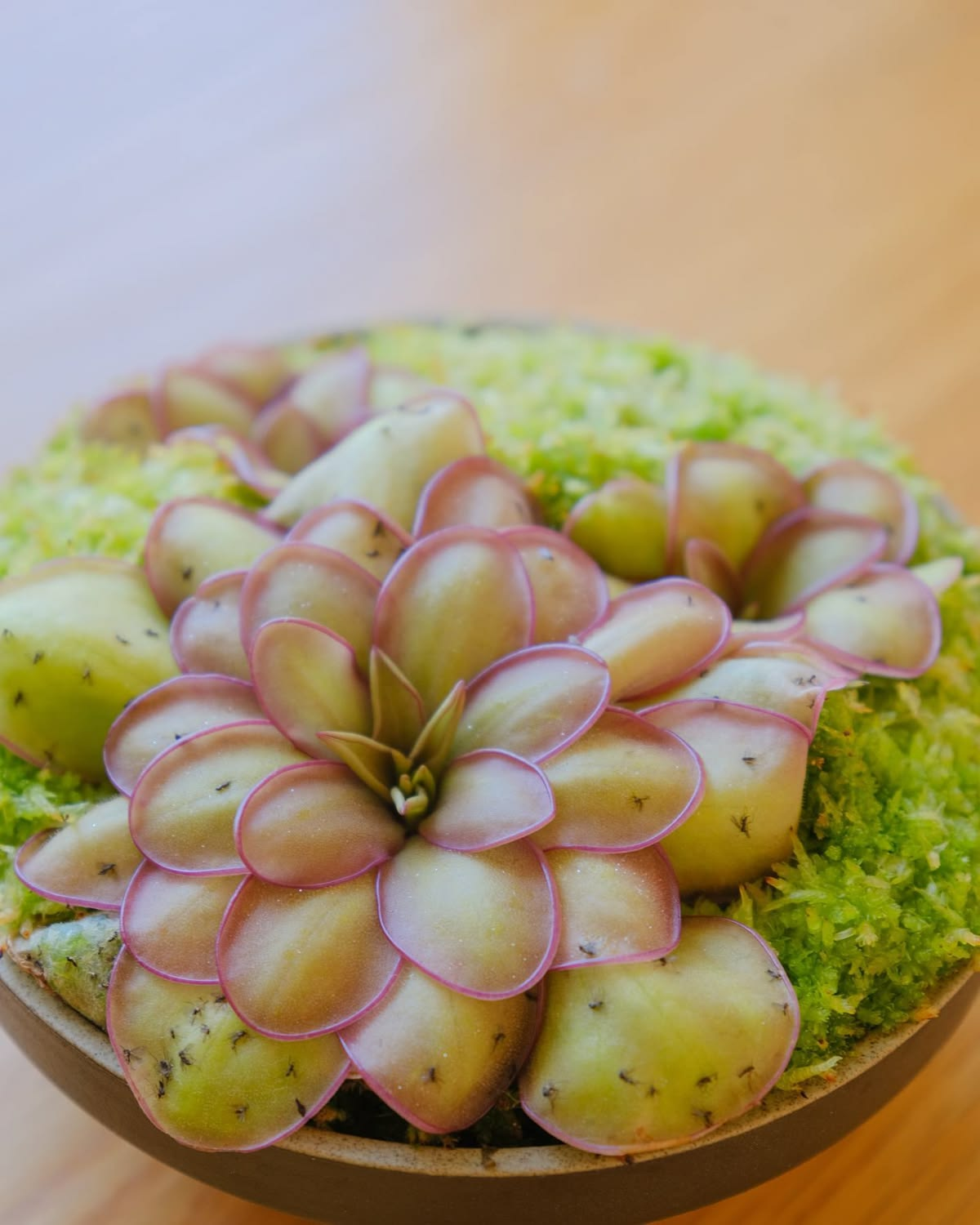
I'm not sure how I first became aware of the LA Carnivorous Plant Society, but I jumped at the chance to attend a meeting. On a Saturday in late February, I found myself in Woodland Hills, completely captivated by a community dedicated to flora that engages in a bit of violence.
Diving into this subculture requires throwing out a few fundamental truths from traditional plant care. If standard gardening is about optimizing soil nutrients, keeping carnivorous plants is about aggressive deprivation. Because these plants evolved in hostile, nutrient-poor bogs, putting them in standard potting soil can overload their systems. They don't want your carefully curated compost. They get their nitrogen the hard way.
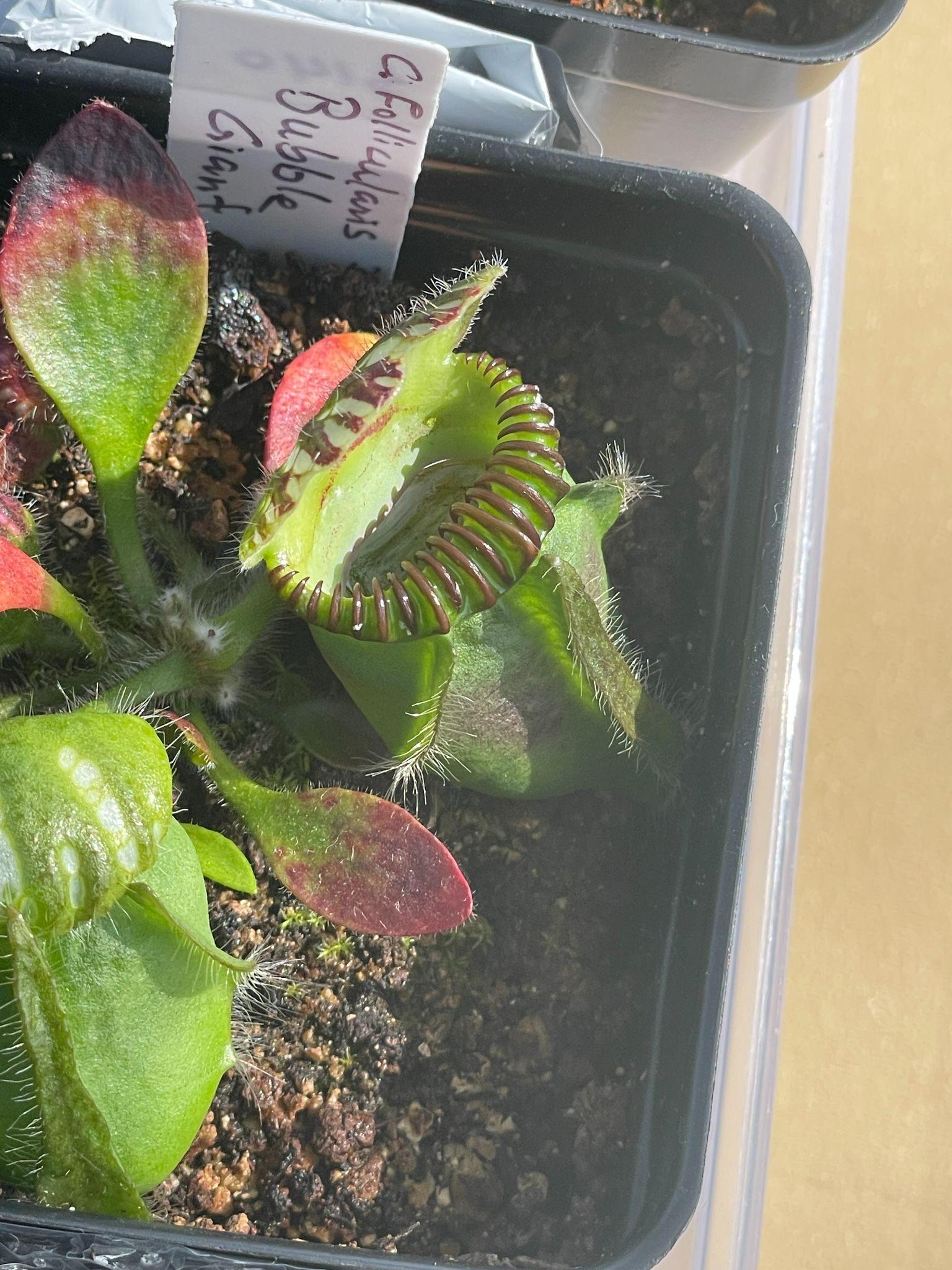
Similarly, one must be very careful about watering. They require water entirely free of minerals and salts. I will admit, I've been a little lazy on this front. Instead of seeking out pure reverse osmosis (RO) water, I've been giving them bottled water. However, my scientific conscience wouldn't let me go in completely blind, so I tested it with a digital PPM (parts per million) meter. It read about 15 ppm, below the danger zone of 20, which I'm calling good enough for my little divas. It's my effort to toughen them up.
Perhaps my favorite evolutionary quirk I've learned about so far is their floral architecture. Carnivorous plants face a unique biological conflict of interest: they need insects to pollinate them, but they also need to eat insects to survive. Their solution is to grow their flowers on absurdly long stalks, keeping the blooms as far away from their sticky leaves as possible. They remind me of Pikmin. It is such a cool and self-aware survival mechanism.
Overall, I feel like the care of carnivorous plants is closer to my work in scientific labs than my approach to gardening. Have you seen chaos gardening? Move dirt, bury seeds, let it happen with minimal interference.
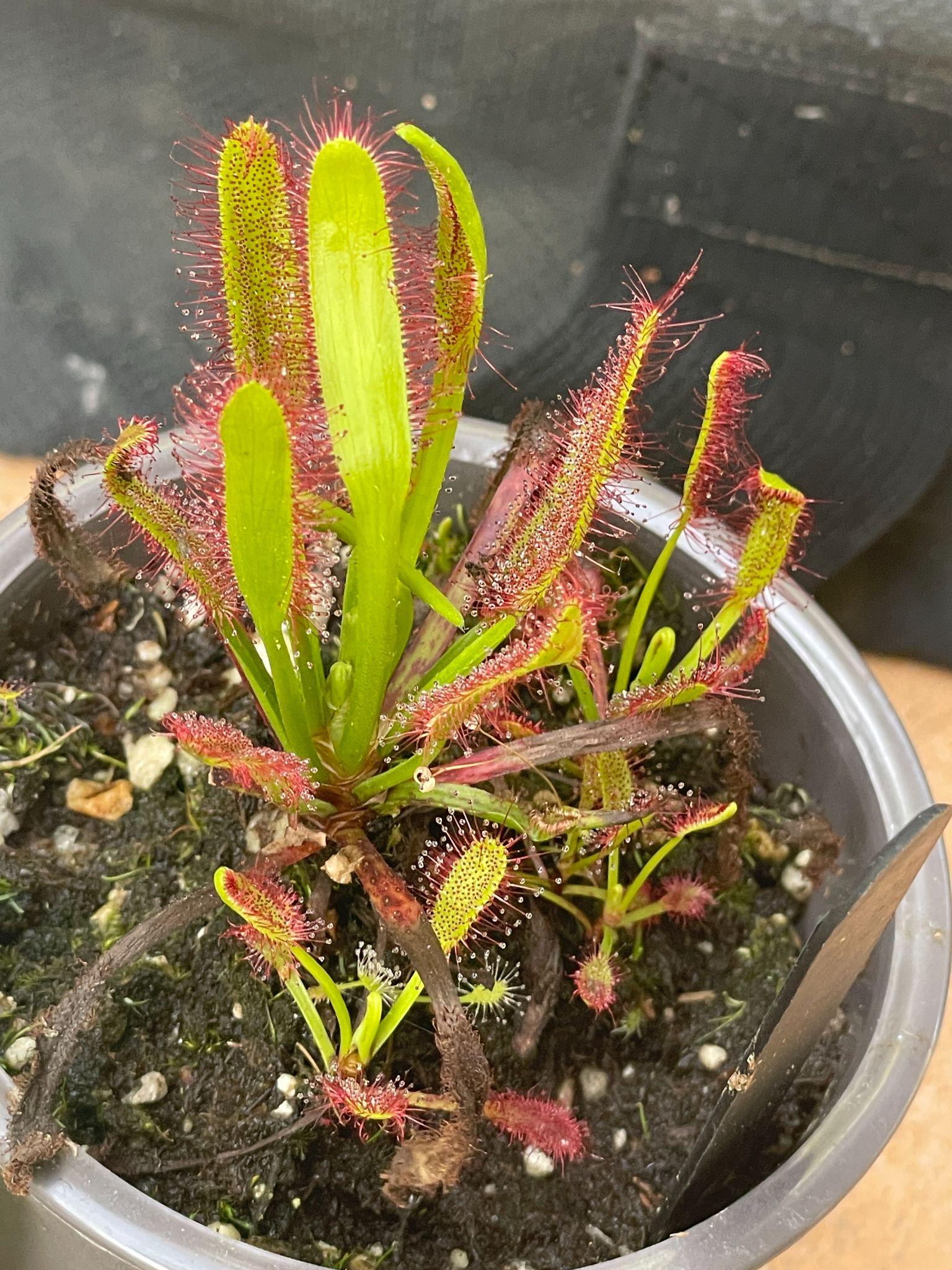
This is reinforced by the final cool thing I learned at this meeting. The activity for the meeting was a demonstration of building an open terrarium with an aquarium as the base. The substrate of choice for the plants in the arrangement was a mix with primarily sphagnum moss. To kill off any competing spores or pathogens, the meeting leaders shared the tip of rehydrating the moss with boiling water. Aseptic technique outside of the lab. Love it.
Whatever I am doing seems to be working, or my newbies are especially resilient. Maybe they get it from their mom. My Mexican Pinguicula (ping) has flowered many times, my mini pings have flowered and are miraculously producing pups right from the tips of fallen leaves, and my sundew appears to be gearing up to flower as well.
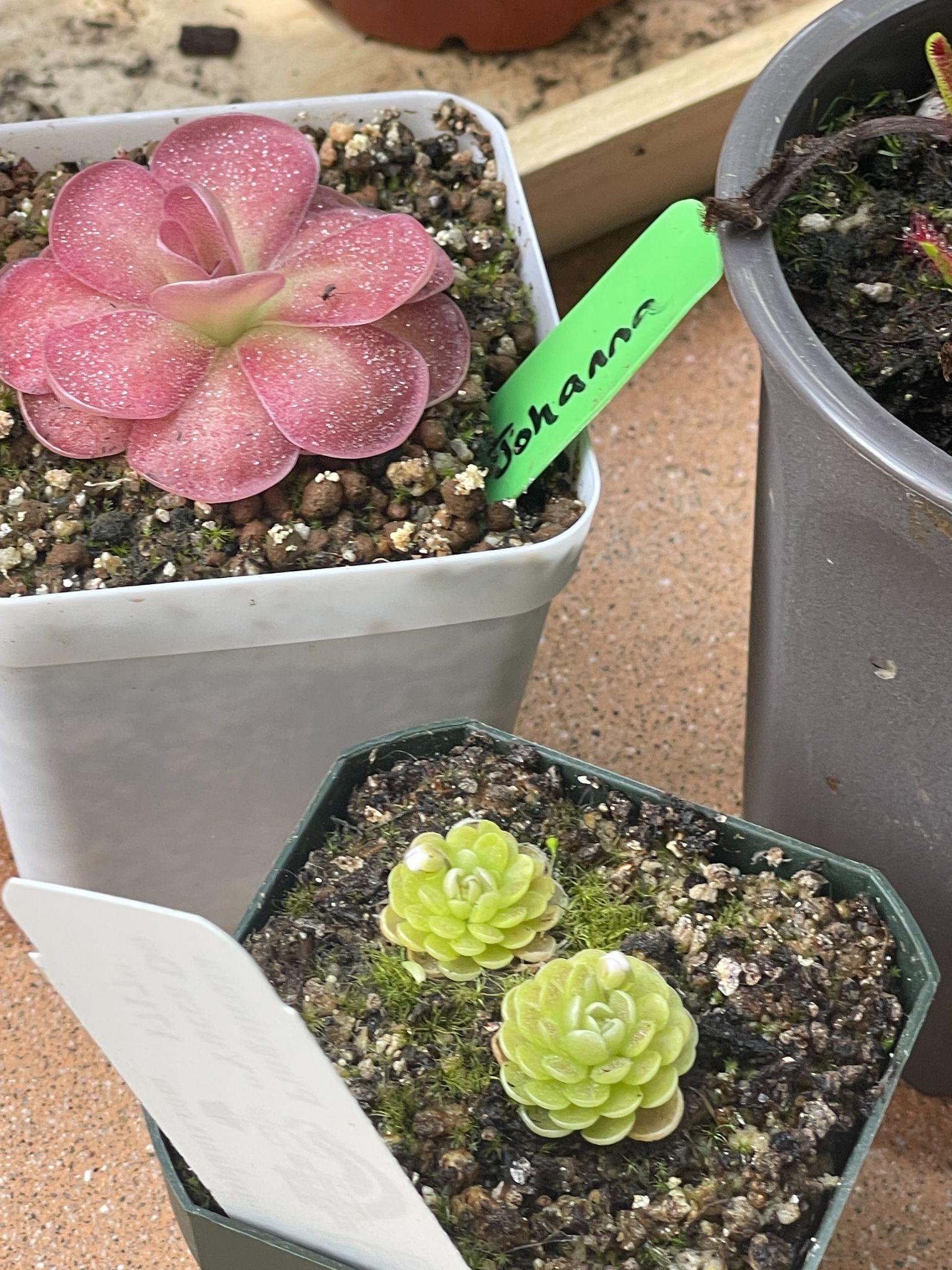
As a biologist, the immediate flowering gave me pause: is this frantic reproduction a stress response, or are they genuinely thriving? I'm leaning toward the latter, primarily because they are living right next to my standard seed starts. The seed starts have attracted fungus gnats, but thankfully the carnivorous plants have viewed this as a Michelin-star buffet. My pink ping, in particular, is absolutely feasting.
My dip into this world has brought me so much joy. There is something deeply satisfying about discovering so much depth within such a hyper-specific topic, along with the wonderful community that surrounds it.